
MVP development
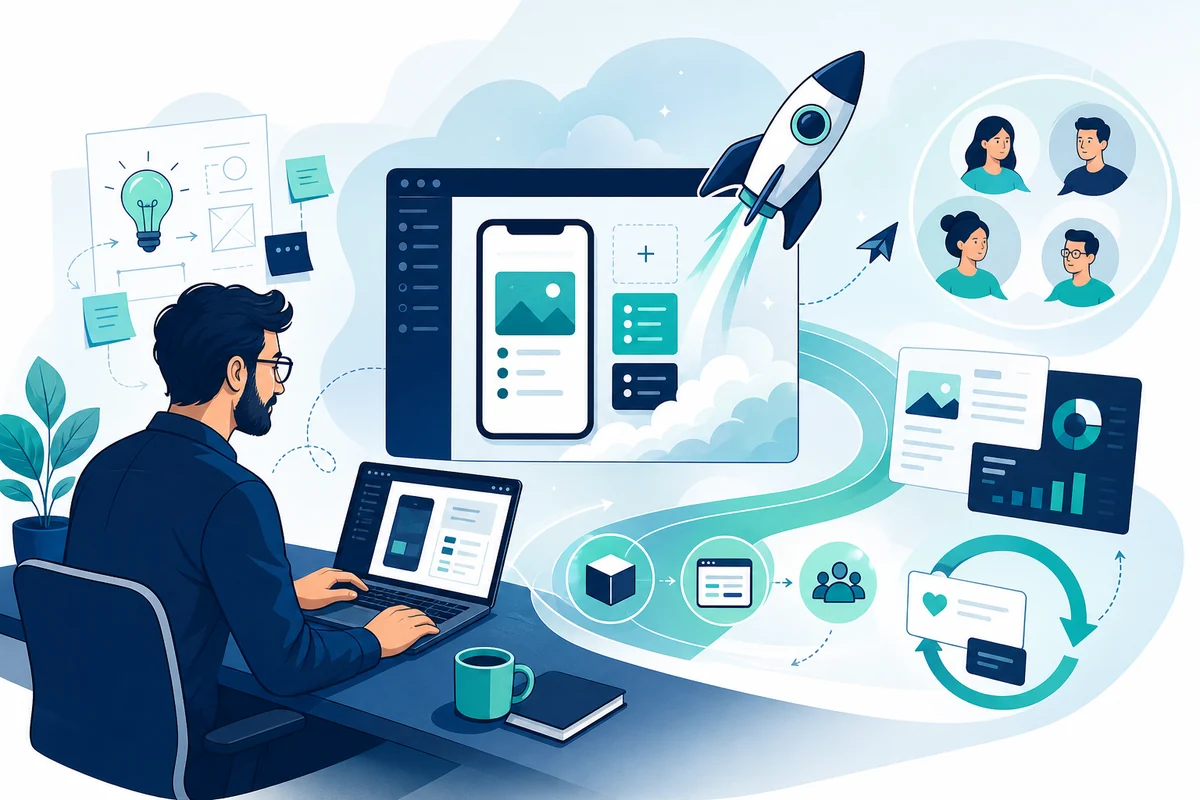
MVP development focused on learning, not feature volume
Turn a product hypothesis into the smallest credible release that can earn useful feedback, adoption or revenue.
Capabilities
What the engagement can include
- Product discovery
- Assumption mapping
- Prototype validation
- Release planning
- Full-stack delivery
- Analytics and feedback loops
Business outcomes
What the work should improve
- A sharper product hypothesis
- Faster useful learning
- Less low-value scope
- A practical next-step roadmap
A practical delivery path
Make the next decision easier.
Frame
Define the user, painful job, intended behavior and commercial assumption.
Test
Use prototypes or lightweight experiments to challenge high-risk assumptions.
Build
Deliver the smallest reliable product that supports real usage and learning.
Decide
Review evidence and decide whether to refine, expand, reposition or stop.
Questions
Before you engage
How long does an MVP take?
Duration depends on product risk, integrations and release scope. Discovery produces a defensible plan rather than a generic timeline.
Is an MVP a low-quality product?
No. Scope is constrained, but security, reliability and usability must still be appropriate for the intended users and risk.
Can you continue after the MVP?
Yes. The same product and engineering context can support subsequent releases if the evidence justifies continued investment.
Start a useful conversation
Let’s make mvp development useful to the business.
Share the current situation, desired outcome and constraints. We will recommend the smallest responsible next step.