
01AI practice
Generative AI
Build grounded LLM applications, retrieval workflows and multimodal features with evaluation, permissions and cost controls.
- RAG and knowledge search
- Document intelligence
- Multimodal product features
AI and machine learning services
Fly Technovation helps international teams evaluate, build and operate AI capabilities with real data, human oversight, measurable quality and production controls.
AI practices
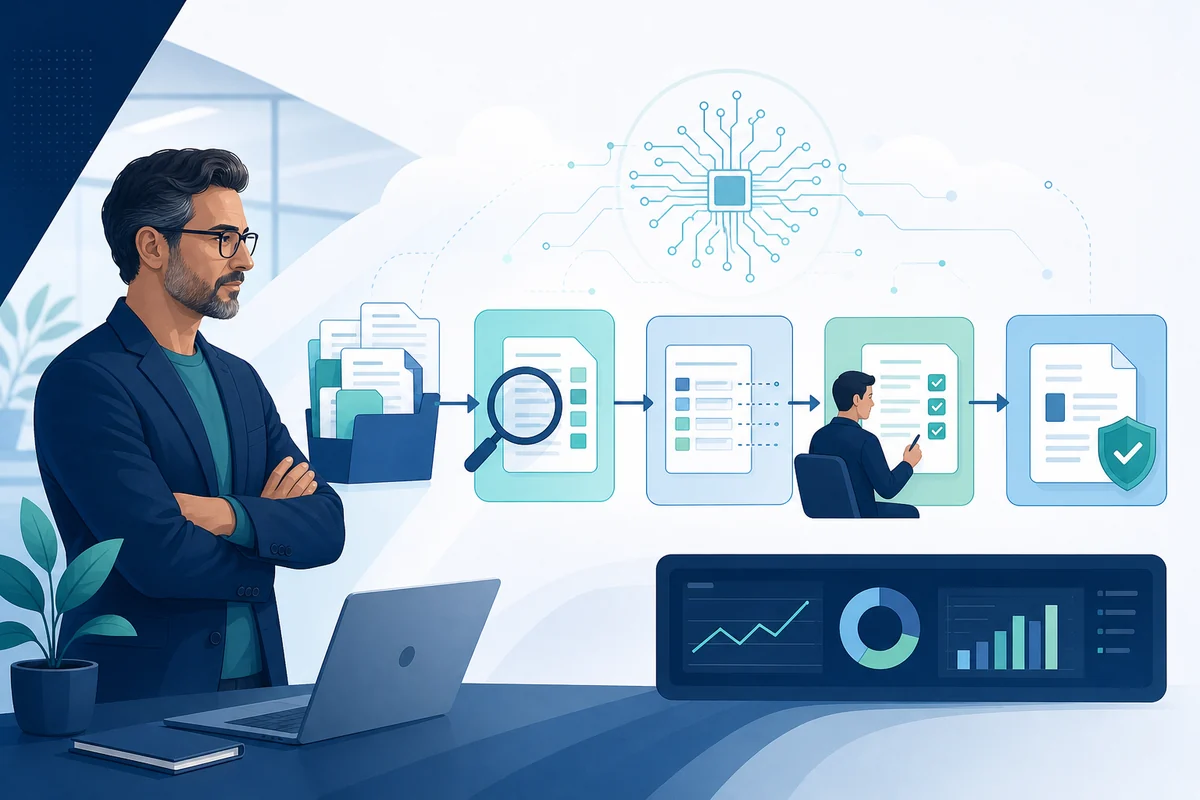
Model choice is only one part of the system. Useful AI also depends on data, workflow design, evaluation, permissions, human judgment and an operating model.
Build grounded LLM applications, retrieval workflows and multimodal features with evaluation, permissions and cost controls.
Design tool-using workflows that can plan and execute bounded tasks while keeping approvals, state and exceptions visible.
Develop predictive capabilities around a defined operational decision, representative data and an explicit measurement method.
Turn unstructured language into searchable, classifiable and reviewable information for customer and internal workflows.
Evaluate image and video workflows for detection, inspection, document capture and other visually grounded decisions.
Prepare governed data foundations and analysis that support useful models, trusted reporting and measurable experiments.
Move models beyond notebooks with repeatable deployment, evaluation, monitoring, cost visibility and rollback planning.
Connect appropriate AI services to your permissions, applications and operational systems without hiding failure modes.
Prioritize opportunities according to business value, data readiness, operational risk and the evidence needed to proceed.
Production before theatre
A convincing demonstration is not the same as a dependable system. We make operating assumptions and failure paths visible before AI becomes part of important work.
Test examples reflect the real information, edge cases and quality expectations of the workflow.
Approved sources, structured outputs and deterministic checks constrain what the system may do.
High-impact or uncertain decisions have an explicit review, correction and escalation path.
Quality, latency, cost, failures and changes remain observable after release.
Delivery pathway
The duration depends on data access, integration and risk. The sequence stays focused on reducing uncertainty before production investment expands.
Define the user, decision, source information, current effort, failure impact and intended business improvement.
Review data access, quality, permissions, privacy, integration constraints and the human expertise already involved.
Build the smallest realistic experiment with representative examples and an evaluation method agreed in advance.
Add authentication, review paths, observability, guardrails, cost limits and dependable system integration.
Monitor quality, cost, latency, exceptions and business impact; refine or stop according to evidence.
Technology approach
We select technologies after understanding the workload. These are representative categories—not partnership claims or a requirement to use every tool.
AI across operations
Industry context matters because the cost of error, data sensitivity, review responsibilities and useful measurements differ.
Catalog enrichment, support assistance, product discovery and demand analysis.
Document processing, reconciliation assistance, forecasting and exception review.
Administrative automation and knowledge support with proportionate privacy and human oversight.
Demand signals, route and capacity analysis, document intake and operational exception handling.
Visual inspection, maintenance signals, knowledge retrieval and production reporting.
Research support, document intelligence, knowledge search and controlled drafting workflows.
AI-specific questions
The right technical answer depends on the workflow, data, impact and operating constraints—not the popularity of a model.
Usually not at the beginning. We first test established models, retrieval, deterministic automation and existing services before considering fine-tuning or custom training.
We compare the options against the real workload: output quality, privacy terms, latency, integration fit, operating cost and the ability to evaluate failures.
Potentially, after data classification, access, provider terms, retention and logging are reviewed. Sensitive information should not enter a workflow until those controls are understood.
The appropriate controls depend on risk. Common measures include retrieval from approved sources, structured output, validation, evaluation sets, permissions, monitoring and human review.
Yes. Production work typically adds security, integration, testing, evaluation, observability, cost controls, failure handling and operational ownership that a prototype may deliberately omit.
Yes. A focused POC should answer one decision with representative data and an agreed evidence threshold rather than attempt to become a rushed production application.
Start a useful conversation
Share the workflow, available information, current effort and cost of error. We’ll recommend a proportionate discovery, experiment or production path.